Introduction
As AI continues to reshape search, the concept of crawling has evolved far beyond its traditional role. In the past, SEO was largely about getting search engine bots to visit your site and index as many pages as possible. Today, with the rise of Generative Engine Optimization (GEO), crawling is no longer just about discovery—it’s about deep understanding, extraction, and continuous validation.
AI engines don’t simply skim through pages. They process full content, analyze structure, and revisit information frequently to ensure accuracy. This shift introduces a critical concept: AI crawl budget.
For businesses running on RakSmart VPS servers, optimizing how AI engines use their crawl budget can directly impact whether your content is fully understood—and ultimately, whether it is used in AI-generated answers.
Understanding AI Crawl Budget in the GEO Era
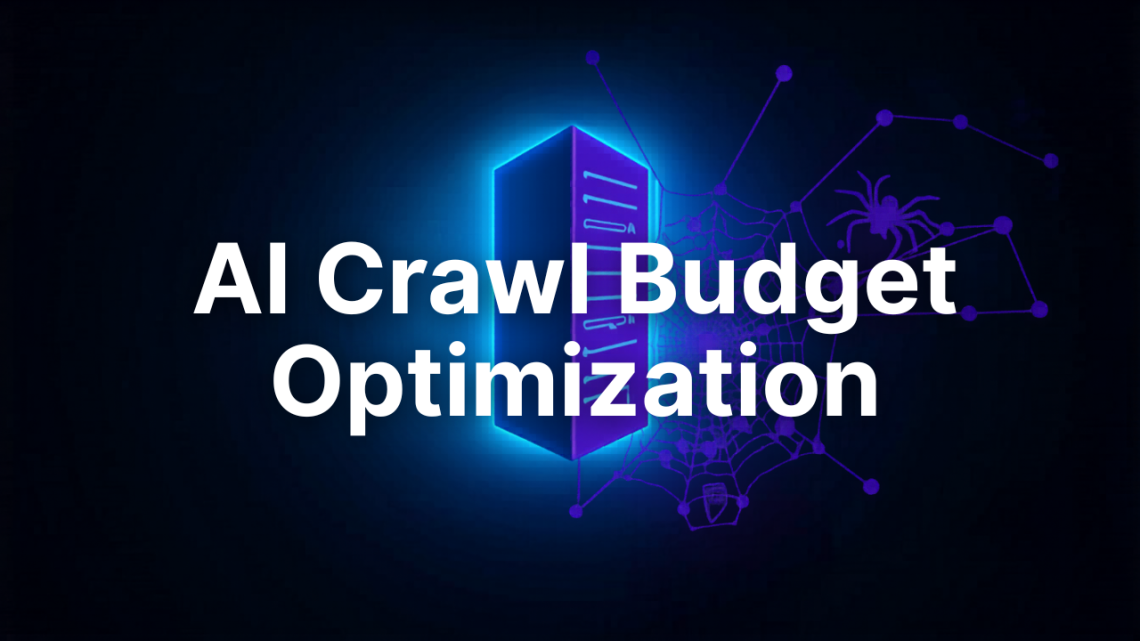
AI crawl budget refers to the amount of time, resources, and attention an AI engine allocates to your site. Unlike traditional crawlers, AI systems are far more demanding. They don’t just fetch pages—they interpret them.
This means every request to your server carries more weight. If your VPS responds slowly or inconsistently, AI engines may not complete their processing. Over time, this reduces both crawl efficiency and content visibility.
In practical terms, optimizing crawl budget is about ensuring that every interaction between your server and AI engines is fast, complete, and meaningful.
Why Crawl Efficiency Matters More Than Ever
In a GEO-driven environment, it’s not enough for your content to exist—it must be fully processed and understood.
If AI engines encounter delays or incomplete responses, several things can happen:
- Content may be partially analyzed
- Important sections may be skipped
- Structured data may not be extracted properly
- Crawl frequency may decrease over time
Even high-quality content can underperform if it isn’t delivered efficiently. That’s why crawl optimization is no longer just technical—it’s a core part of your overall GEO strategy.
How AI Crawlers Interact with VPS Servers
AI crawlers behave differently from traditional bots, and this has direct implications for your VPS setup.
They tend to request more data, process it more deeply, and revisit it more often. This creates a higher and more consistent load on your server.
Key differences include:
- Full content retrieval instead of just metadata
- Deep semantic analysis of page structure and meaning
- Frequent revisits to validate and refresh information
- Concurrent requests that increase server load
Because of this, your VPS must be able to handle both depth and volume of requests simultaneously.
The Role of RakSmart VPS in Crawl Optimization
A strong VPS foundation is essential for handling AI crawl behavior effectively. RakSmart VPS servers provide the performance and stability needed to support GEO strategies at scale.
With dedicated resources and optimized infrastructure, they help ensure that AI engines can consistently access and process your content without interruption.
Key advantages include:
- Dedicated CPU and RAM for stable performance
- SSD storage for fast data retrieval
- High bandwidth for handling multiple requests
- Reliable uptime to maintain crawl consistency
This combination allows your server to deliver content quickly and reliably, which directly improves AI crawl efficiency.
Core Strategies to Optimize AI Crawl Budget
Optimizing crawl budget is about reducing waste and maximizing efficiency. Every request from an AI engine should result in meaningful processing.
One of the most important steps is improving server response time. Faster responses allow AI engines to process more content within their allocated crawl window. Even small delays can add up when multiplied across multiple requests.
Another key strategy is implementing caching. By reducing the need for repeated processing, caching allows your VPS to serve content faster and handle more concurrent requests.
At the same time, it’s important to eliminate unnecessary content. Pages that provide little value or duplicate information can consume crawl resources without contributing to GEO performance.
To summarize, focus on:
- Improving response speed
- Reducing redundant processing
- Prioritizing high-value content
- Maintaining consistent delivery
Advanced Techniques for Better Crawl Efficiency
Once the basics are in place, more advanced optimizations can further improve performance.
For example, intelligent request handling can ensure that AI crawlers receive optimized responses without overloading the server. Instead of treating all requests equally, your system can prioritize efficiency and stability.
Another effective approach is preloading important content. By ensuring that key pages are always ready for fast delivery, you reduce delays during crawling.
You can also consider structured content delivery through APIs, which allows AI engines to access information in a more direct and efficient way.
Some advanced techniques include:
- Using multi-layer caching (server + application level)
- Pre-rendering content to avoid heavy processing
- Optimizing request routing for faster handling
- Providing API endpoints for structured access
Common Crawl Budget Issues on VPS
Even with a good setup, certain issues can reduce crawl efficiency if not addressed.
One of the most common problems is slow server response, often caused by inefficient configurations or insufficient resources. Another issue is excessive dynamic processing, which forces the server to regenerate content repeatedly instead of serving cached versions.
Other common challenges include:
- High CPU usage during crawl spikes
- Inconsistent response times
- Duplicate or low-value content
- Frequent downtime or instability
These issues not only waste crawl budget but can also reduce AI confidence in your site over time.
Monitoring AI Crawl Behavior
To optimize effectively, you need visibility into how AI engines interact with your server. This is where VPS-level monitoring becomes extremely valuable.
By analyzing server logs and performance metrics, you can identify patterns such as:
- Crawl frequency
- Request intensity
- Resource usage spikes
- Repeated access to specific pages
These insights allow you to fine-tune your infrastructure and ensure that your server is always ready for AI interaction.
Scaling for Increasing AI Demand
As your content grows and gains visibility, AI engines will interact with it more frequently. This means your infrastructure must scale accordingly.
RakSmart VPS makes this process straightforward by allowing both vertical and horizontal scaling. You can increase resources or distribute workloads across multiple servers without disrupting performance.
To support long-term growth, consider:
- Upgrading CPU and RAM as needed
- Adding caching layers
- Integrating CDN for global delivery
- Distributing traffic across multiple nodes
Scaling ensures that your crawl efficiency remains high even as demand increases.
Conclusion
In the GEO era, crawl budget is no longer just about how often your site is visited—it’s about how effectively your content is processed. Every interaction between your VPS and AI engines plays a role in determining whether your content is understood and used.
By optimizing server performance, improving content delivery, and reducing inefficiencies, you create an environment where AI engines can fully utilize their crawl budget.
With RakSmart VPS servers, you gain the performance, stability, and control needed to support this process. The result is not just better crawling—but better understanding, stronger visibility, and higher chances of being included in AI-generated responses.